
Most South African businesses think producing video content requires a large agency retainer or a full production crew. That assumption is costing them months of content they could already be publishing. In-house video production is not about cutting corners. It is about building a system that lets you create consistently, at a quality level your audience respects, without burning through budget on every single shoot.
At Solution Labs, we work with brands across different industries and the pattern is always the same. The businesses that win with video are not necessarily the ones with the biggest budgets. They are the ones with a repeatable process.
Why In-House Video Production Is Now a Realistic Option
The barrier to entry for video production has dropped dramatically. A modern smartphone shoots 4K footage. Affordable mirrorless cameras produce cinematic results at a fraction of what professional camera packages cost five years ago. Editing tools like DaVinci Resolve are free and used by professional filmmakers worldwide. According to Wyzowl's 2025 Video Marketing Report, 91% of businesses now use video as a marketing tool, and the brands that create content most consistently are increasingly doing so with internal resources rather than outsourced production.
The shift is not just about cost. It is about speed. An in-house video production capability means you can respond to trends, capture real moments and publish content on your own schedule rather than waiting for agency availability or production timelines that stretch weeks ahead.
The Equipment You Actually Need to Start
In-house video production does not require a warehouse full of gear. Start with the essentials and build from there as your output grows.
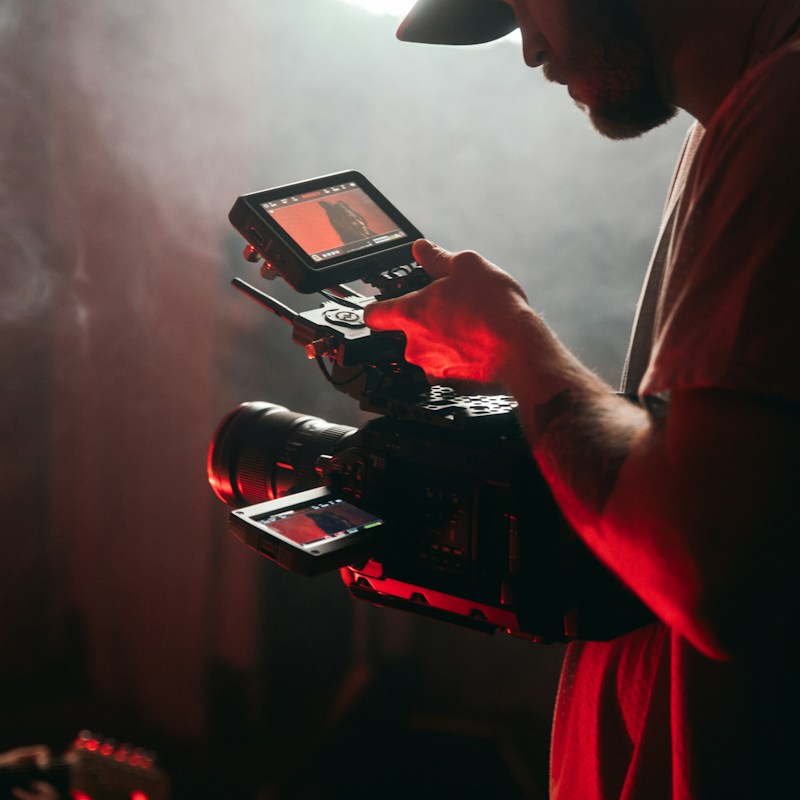
For most small and medium businesses in South Africa, a practical starting kit looks like this. A mirrorless camera with a kit lens, or a flagship smartphone with a quality camera. A basic LED panel light or a ring light for controlled indoor shooting. A decent lavalier microphone, because audio quality matters more than most people realise. A stable tripod or gimbal for smooth movement shots. Free editing software like DaVinci Resolve or iMovie to handle post-production without subscription costs.
That setup, bought carefully, costs under R15,000. A single agency production day for a corporate video in Cape Town will often cost more than that. The calculation shifts quickly once you factor in producing content weekly or monthly over a full year.
The Brief Is Where Most In-House Productions Fail
Equipment is the easy part. The reason most in-house video production attempts produce mediocre content has nothing to do with the camera. It is the brief. Without a clear brief, shoots go long, footage is unusable and the edit becomes a guessing game.
Every video you produce in-house should start with a written brief that answers four questions. Who is watching this? What do you want them to feel or know by the end? What is the one action you want them to take? Where will this video live and for how long?
We saw this play out with a student accommodation client we worked with on their brand launch video. The brief was tight: communicate energy, lifestyle and modernity in under 90 seconds for social distribution. That clarity meant the shoot day ran efficiently and the edit came together quickly. The result was an evergreen launch asset that still performs. The brief made that possible, not the equipment.
Building a Repeatable In-House Video Production Workflow
Consistency is what separates brands that see results from video from brands that produce the occasional piece and wonder why nothing compounds. According to HubSpot's Marketing Statistics Report, marketers who publish video content consistently report 49% faster revenue growth than those who do not. That compounding effect only happens with a workflow, not one-off shoots.
A sustainable in-house video production workflow has five stages. Planning covers topic selection, scripting and shoot logistics. Pre-production covers location scouting, talent briefing and equipment prep. The shoot itself should follow the brief precisely. Post-production covers editing, colour grading and audio treatment. Distribution covers publishing, platform optimisation and repurposing.
Each stage should have a checklist your team follows without exception. The first time you run through it will take effort. By the fifth or sixth shoot, it becomes automatic and your quality level lifts noticeably without any change to your kit.
Scripting for Camera: What Works and What Does Not
A common mistake in in-house video production is reading a full script to camera. It almost always looks and sounds unnatural. The better approach is a structured outline with bullet points covering the key ideas in the order you want to communicate them. Rehearse it two or three times before you roll. Let the delivery breathe.
For social video, keep it under 60 seconds and lead with the most important point in the first three seconds. Attention drops off sharply after that. For longer format content like explainers or behind the scenes pieces, a looser conversational approach works well as long as the structure is clear and the edit is tight.
One of the brands we work with in the commercial property space has built an entire content series around simple walkthrough videos filmed on location at their sites. No elaborate script. Just a clear brief, a confident presenter and tight editing. The content performs consistently because it is genuine and specific, not polished for its own sake.
When to Keep It In-House and When to Bring In a Partner
Not every video should be produced in-house. The brands that do this well know where to draw the line. Routine content, social clips, behind the scenes footage, team updates and product demonstrations are all well suited to internal production once your workflow is established.
Brand launch films, hero campaign content and anything that will live on your website homepage for years warrants a professional production partner. The investment makes sense when the stakes are high and the output needs to carry weight for an extended period.
That is the model we help our clients build at Solution Labs. An internal capability for the volume work and a professional production layer for the content that defines the brand. If you want to build a video production system that works for your business without overspending, talk to the Solution Labs team and we can map out exactly what that looks like for your setup.