A strong B2B video content strategy is not a list of videos waiting for a camera crew. It is a commercial system that helps the right people understand your offer, trust your expertise, and take the next step. For professional services, property, technology, and complex B2B products, video works best when every scene has a job in the buying journey.
The opportunity is clear. HubSpot reports that 89% of businesses use video marketing, while Wyzowl’s latest video marketing research shows how widely video is now used to explain products and support sales. The advantage is no longer simply producing video. It is building a repeatable system that connects video to positioning, distribution, and measurable action.
Start your B2B video content strategy with a buying problem
Most weak video plans begin with formats. They ask whether the business should make interviews, reels, case studies, or animated explainers. That is backwards. Begin with the point where a prospect hesitates.
Are they unsure what you actually do? Do they struggle to compare you with a cheaper provider? Do they need proof that your team understands their sector? Each problem calls for a different editorial job. An overview film can clarify the offer. A customer story can reduce perceived risk. A process video can make an invisible service tangible. A point of view piece can show that your team understands the market rather than merely selling into it.
Write the commercial question first, then choose the video format. This keeps production focused and gives the finished asset a clear role in the sales process.
Build a message architecture before you plan a shoot
A B2B video content strategy becomes efficient when the message is decided before the schedule. Define four layers: the audience, the problem, the proof, and the action. The audience should be specific enough that the script sounds like it was made for one real decision maker. The problem should describe a costly tension, not a vague aspiration. Proof can include results, expertise, a visible process, or a credible customer perspective. The action should be proportionate to the viewer’s readiness.
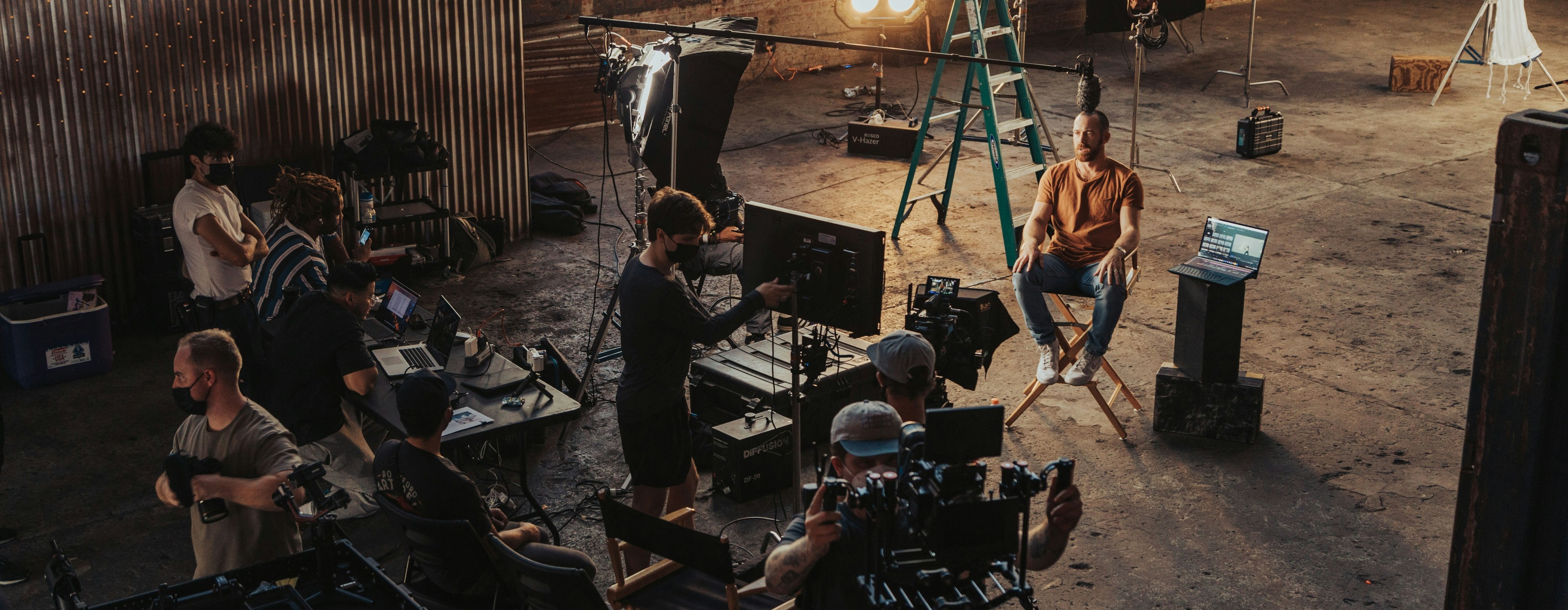
This architecture also helps a single shoot produce a useful content library. One conversation with a founder or subject matter expert can create a main insight film, several focused answers, social cutdowns, sales enablement clips, and still frames for campaign use. That is not content for content’s sake. It is a way to extend the value of a well prepared production day.
Design the B2B video content strategy around distribution
Distribution should influence the script from the beginning. A homepage film needs clarity within the opening seconds. A LinkedIn video needs a strong idea that works without sound. A sales follow up can spend more time on detail because the viewer already has context. A case study can be structured around the objection it answers.
Plan the destination and the viewing condition for every asset. Then create the correct version for that environment. Add captions, write a useful opening line, and make the next action obvious. A great film with no distribution plan becomes an expensive file in a shared folder.
For a practical example of how connected creative work can support a broader marketing system, see the Solution Labs portfolio. Our work across property, retail, interiors, and business brands is built around the relationship between the story, the audience, and the commercial objective.
Use video to make expertise visible
B2B buyers are not only evaluating a service. They are evaluating the people who will be trusted with a difficult outcome. Video gives a company a way to show how it thinks, how it works, and what it notices.
That does not mean producing polished claims about being passionate or innovative. It means showing the decisions behind the work. Ask a subject matter expert to explain a common mistake. Show the planning behind a project. Walk through the trade offs that shaped a result. Interview a client about the problem before asking about the final outcome.
We have seen this principle work in practice with a Cape Town property developer where lifestyle led video helped make a new living concept concrete, and with an industrial property brand where walkthrough content turned infrastructure into a clear brand experience. The camera is useful because it makes the thinking observable.
Measure the system, not just the view count
Views are useful as a distribution signal, but they are not the whole business case. Track whether the video reaches the intended audience, holds attention, increases qualified site visits, assists sales conversations, or contributes to enquiries. Use a simple naming convention for campaigns so analytics can connect each asset to its channel and purpose.
Review performance at three levels. Attention tells you whether the opening and format are working. Engagement tells you whether the idea is relevant. Commercial response tells you whether the asset is helping people move. A video can have modest reach and still be valuable if it supports a high value sales conversation. Another can attract thousands of views and produce no meaningful demand.
Set a baseline before publishing. Then make one improvement at a time. Change the opening, the audience, the call to action, or the distribution placement. This turns video from a one off campaign into a learning loop.
Make production repeatable and commercially useful
The strongest teams do not wait for a perfect campaign idea before they film. They create a quarterly editorial plan tied to business priorities, then maintain a practical balance of authority, proof, education, and brand perspective. Each production should answer several related questions, not just one headline topic.
That approach requires discipline. Keep a running list of buyer questions. Build a small library of approved brand messages. Prepare interview prompts that invite specific answers. Capture extra detail while the crew and subject are already in place. Store final files with clear titles and intended uses. These operational choices make it easier for marketing and sales teams to use the work long after launch day.
Video is most effective when it is treated as part of the customer journey rather than a decorative layer. A considered B2B video content strategy gives every production a reason, every channel a role, and every result a useful lesson.
If you want to build a video system that makes your expertise clearer and supports measurable growth, the Solution Labs team can help you put the right strategy in place.